
Telycam Vision+ 4KN Captures Zhuque-3 Rocket's Land Recovery
Witnessing a Milestone in Chinese Commercial Spaceflight
Tasked with covering a historic first-stage landing in the middle of the Gobi Desert, Beijing Traffic Radio's broadcast team turned to a single Telycam Vision+ 4KN PTZ camera to capture the one moment they couldn't afford to miss. The footage it delivered became the defining shot of the mission.
The Goals
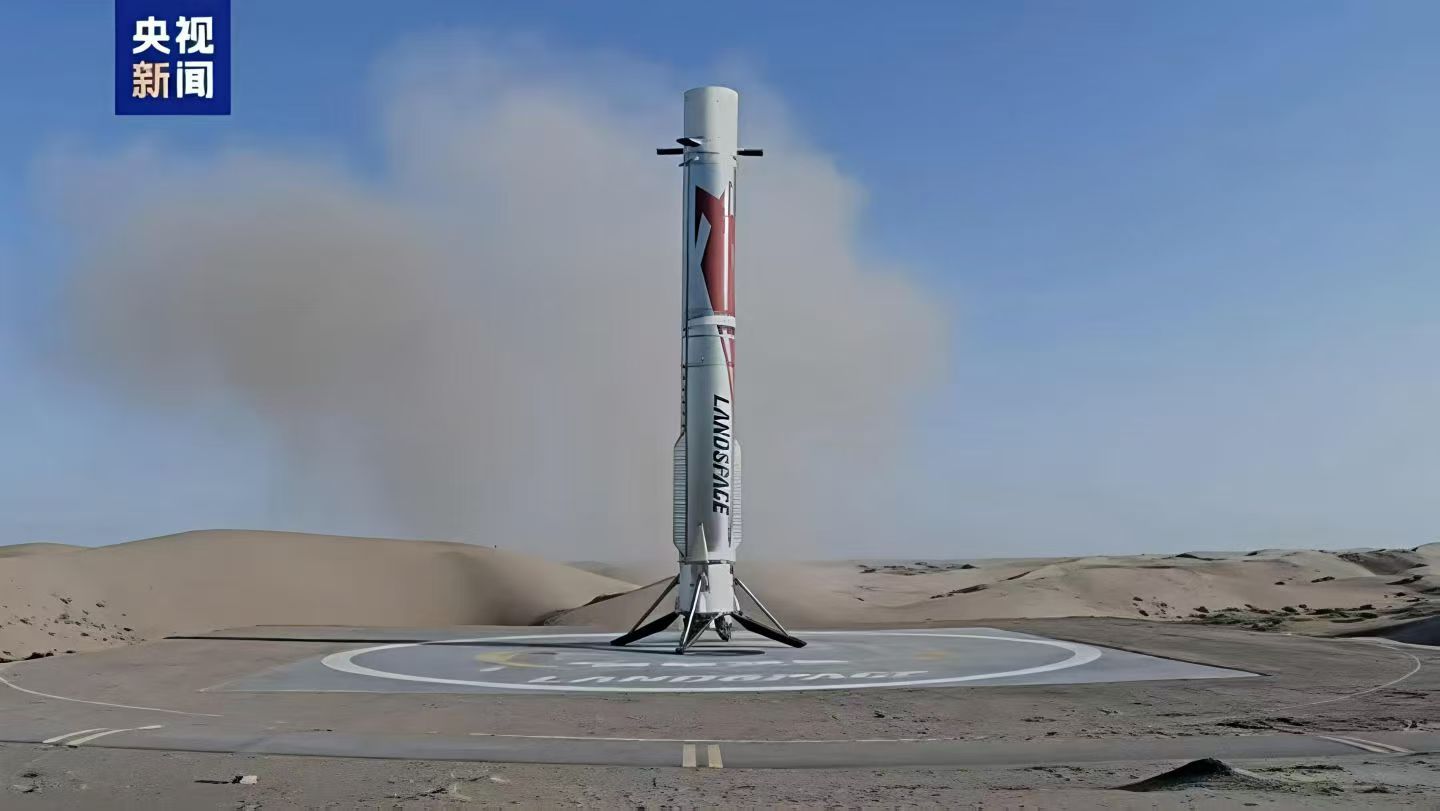
On August 19, 2026, LandSpace's Zhuque-3 Y2 launch vehicle lifted off from the Dongfeng Commercial Aerospace Innovation Test Zone in northwest China. After stage separation sent its second stage and payload into orbit, the first stage began the far more difficult part of the mission: reorienting itself, re-entering the atmosphere, decelerating, and touching down on landing legs at a dedicated recovery site in the Gobi Desert near Minqin, Gansu Province.
A successful landing would make Zhuque-3 the first commercial rocket in China ever to complete a first-stage recovery — and Beijing Traffic Radio's broadcast team on-site had exactly one chance to capture it on camera.
Operational Constraints
Filming the launch process entails immense
difficulty and unpredictability.
Engineered for Extremes
The Recovery Workflow
The Vision+ 4KN was positioned in the open desert a short distance from the landing pad, tasked with following the entire arc of the mission — from liftoff, through the vehicle's ascent out of view, to the far more demanding job of reacquiring and tracking the returning booster as it dropped back through the atmosphere.
That return proved to be the real test. As the first stage came down, it moved at near-sonic speed, and the operator had only seconds to locate it, frame it, and hold focus as distance, speed, and brightness all shifted rapidly.
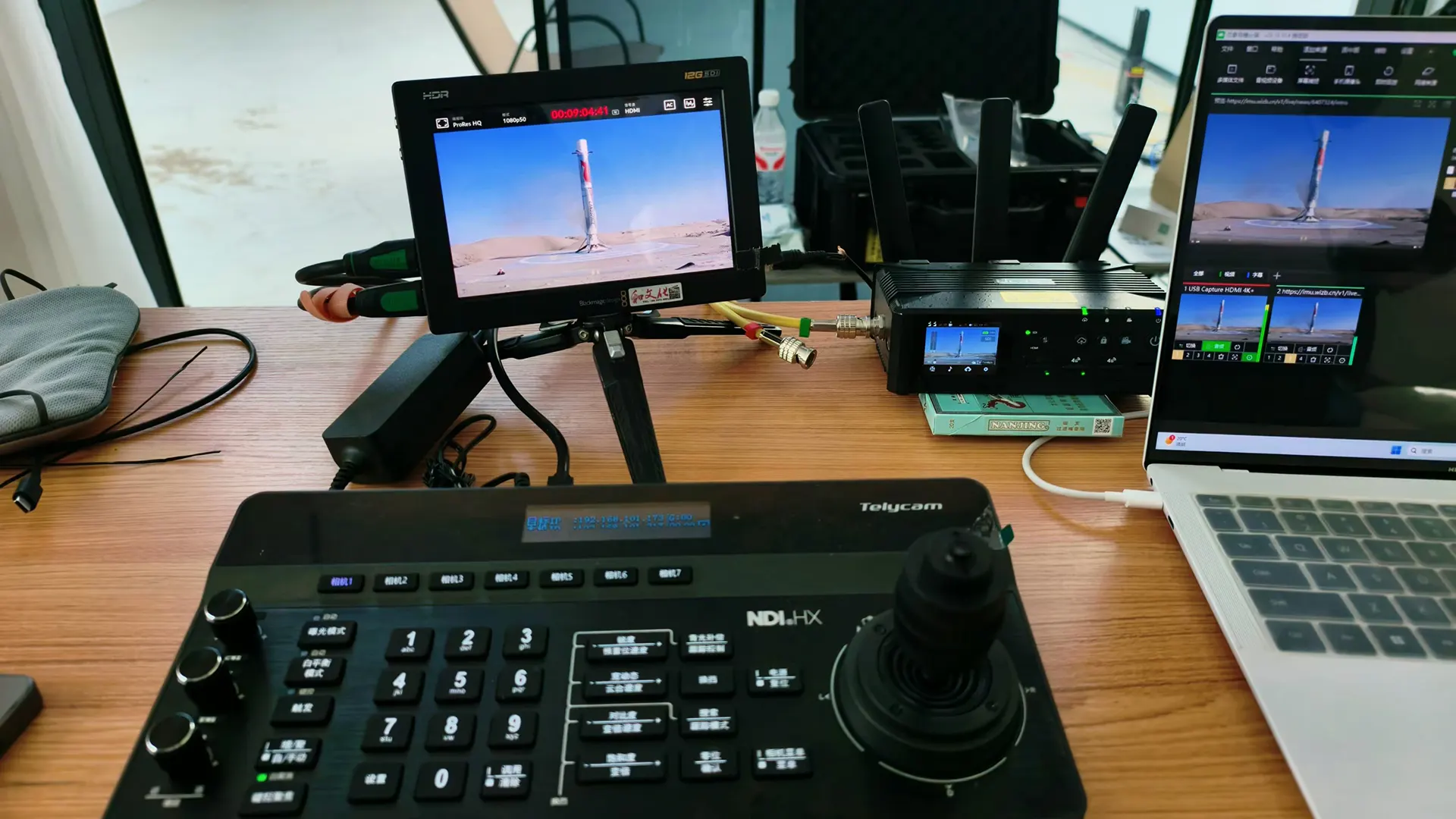
Rather than relying on any automated tracking, the operator worked the V JOY+ AT keyboard by hand throughout the descent — panning, tilting, and adjusting zoom in real time to keep pace with the booster's trajectory as it closed in on the pad.
In the last moments before touchdown, engine-flame glare, ground vibration, and rising dust hit the frame all at once — exactly the kind of conditions that punish any lag between what the operator sees and how quickly the camera responds.
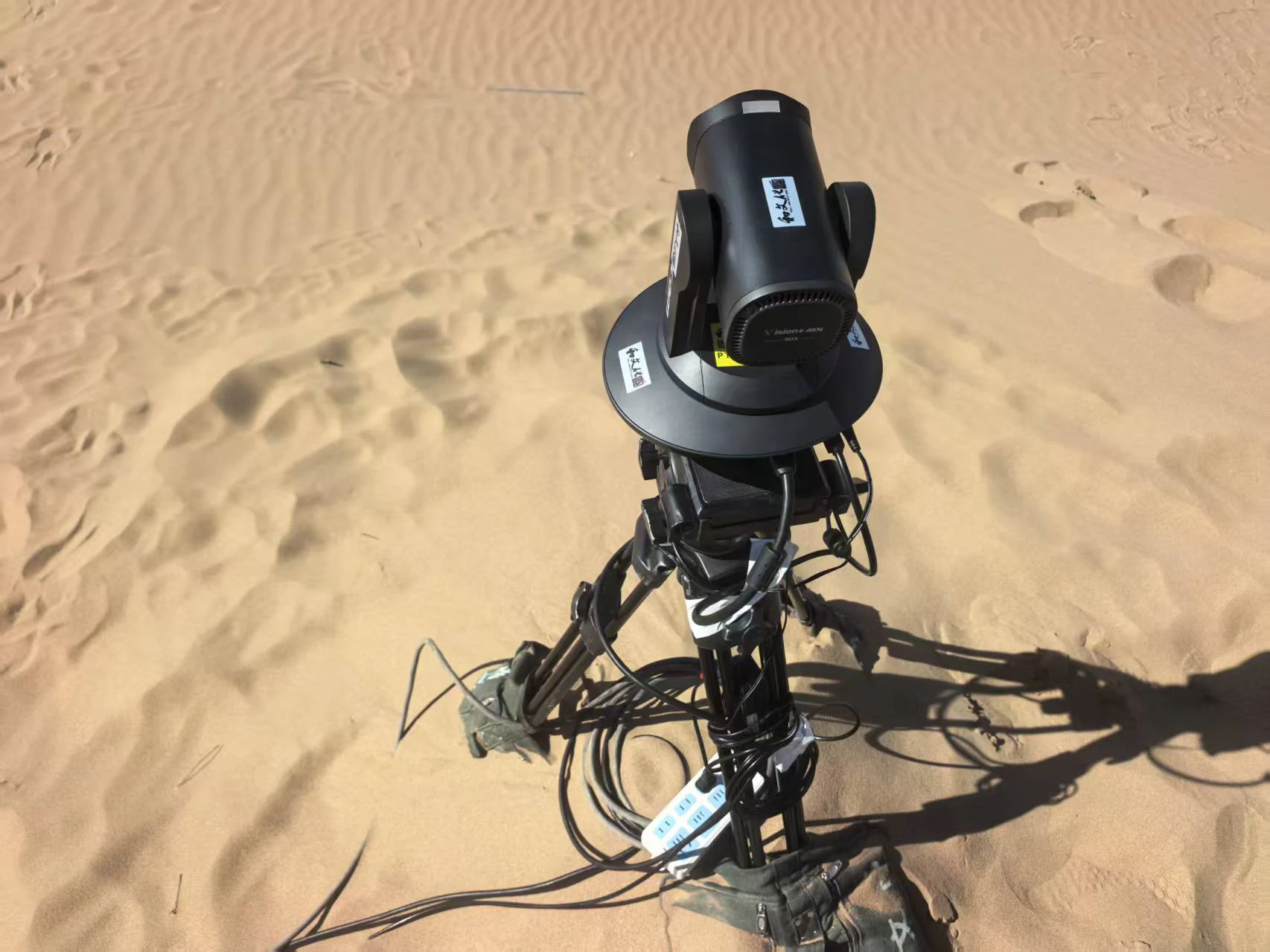
To keep the Vision+ 4KN steady in the desert wind, the crew weighted down its tripod with sandbags — a low-tech fix for a very real problem in an environment with no other way to shelter the gear.
Signal from the Vision+ 4KN fed directly into the production van, where it was monitored alongside the vMix switching system and cut live into the broadcast feed in real time.
A Shot With No Second Take
The instant that mattered most came down to a single frame: the production monitor's timecode read 00:12:54 as the booster closed in on the landing pad, engines firing to slow its final descent. Guided entirely by hand through the V V JOY+ AT keyboard, the operator held the target locked and in focus through that entire sequence, capturing the touchdown cleanly on the first and only attempt.
For the broadcast team, the result validated the camera's ability to hold a fast-moving, high-contrast target under real atmospheric and lighting stress — the same combination of speed, glare, and unpredictable exposure that makes rocket-recovery footage so difficult to capture cleanly in the first place, and something no amount of post-production could have fixed after the fact.
A Track Record in the Field
The Zhuque-3 recovery was not Telycam's first involvement in a major Chinese spaceflight broadcast. The Vision+ 4KN had also been used for coverage of the Long March 10A maiden flight from Wenchang in July 2026.The two assignments presented very different environmental conditions — coastal heat and humidity at Wenchang versus wind, dust, and temperature changes in the Gobi Desert.
For high-stakes live events where a missed frame means a missed moment, that track record is the argument that matters: rocket launches, major scientific test events, outdoor sporting events, industrial sites, and large-scale government and corporate broadcasts all share the same requirement of a camera system the crew can trust when there's only one take.