
Five Cameras, Two People
A New Approach to Multi-Camera Orchestra Production
Producing a multi-camera recording of a live orchestra is a demanding task. With dozens of musicians performing simultaneously, the production team must anticipate instrumental entries, select the right camera angles and coordinate camera movements, all while keeping pace with the music.
Traditionally, this requires considerable preparation and a dedicated production crew. But advances in PTZ camera technology and intelligent production workflows are creating new possibilities for smaller teams.
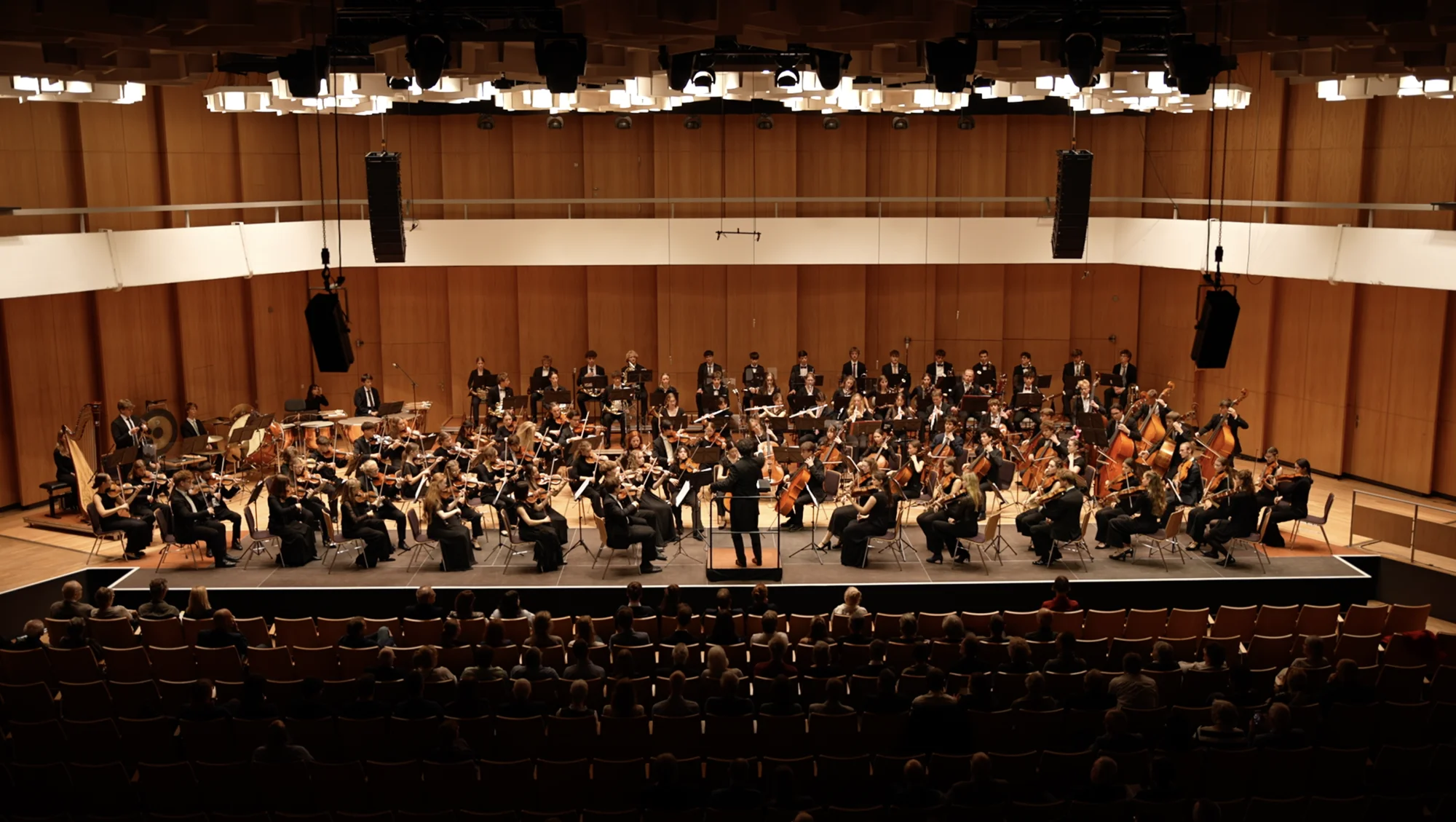
On October 16, 2026, the State Youth Orchestra of Saxony performed Gustav Mahler's First Symphony under conductor Tobias Engeli at Stadthalle Chemnitz, Germany. The performance was recorded using five cameras, more than 60 programmed presets and a crew of just two people.
At the heart of the production workflow was MiruSuite Orchestra, a software solution designed to connect musical preparation with real-time camera coordination.
The production offers an interesting example of how multi-camera orchestral recording can become more manageable, even with a compact production team.
Five Cameras, More Than 60 Presets: Managing the Complexity
Recording an orchestra requires more than simply placing cameras around the venue.
Different instruments and sections of the orchestra need to be captured at the right moments. A close-up of a soloist, a wider shot of an instrumental section or a camera movement across the ensemble can each contribute to the visual storytelling.
The five-camera setup consisted of four Telycam Explore XE PTZ cameras and one static camera. With more than 60 programmed presets available, the team had a wide range of prepared shots to choose from—the challenge was making the right shot available at the right moment.
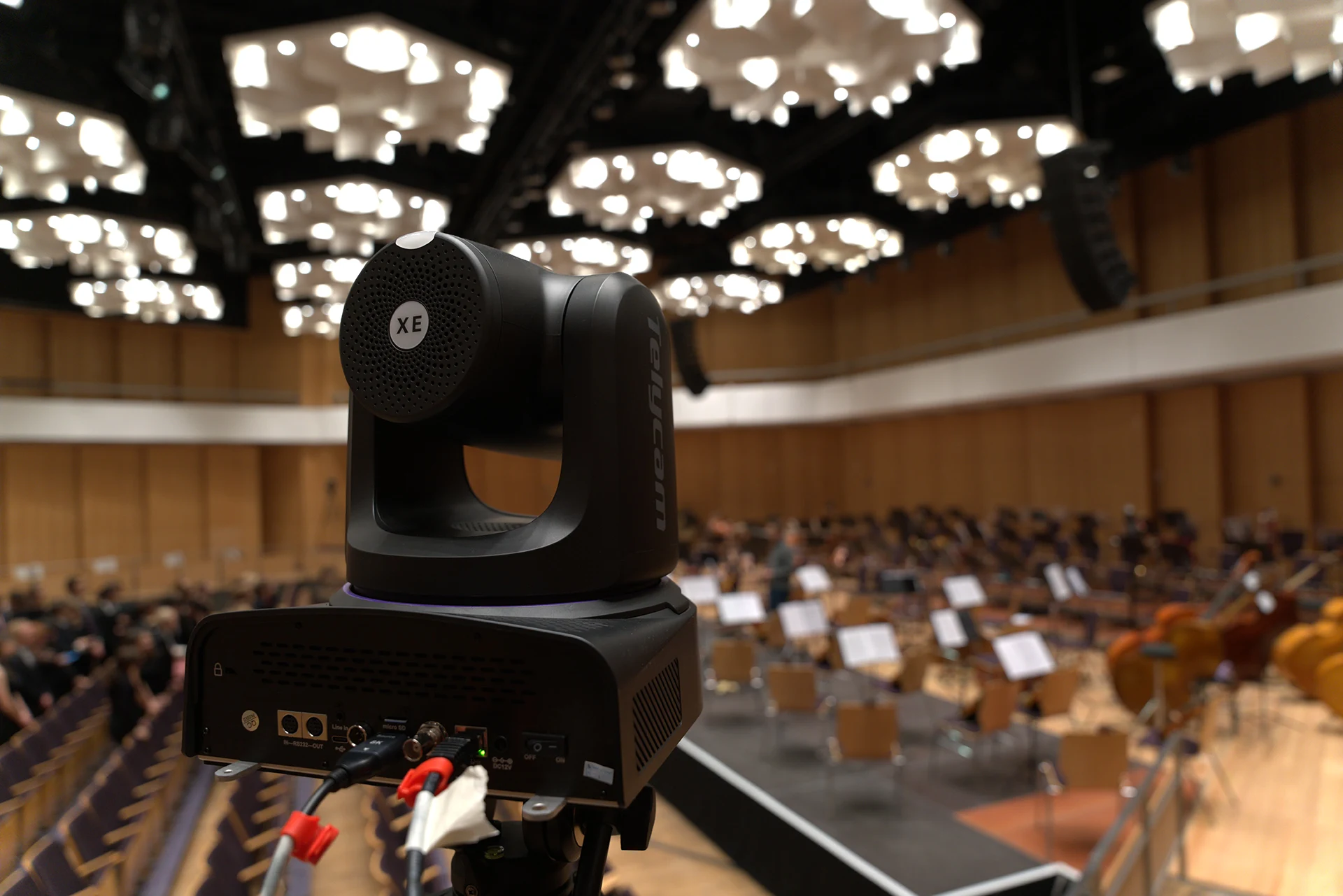
One of the camera positions in Chemnitz. Each position determines which instruments and angles are available.
The production team needed to know which instruments were about to enter, which camera angles were available and how to prepare the next shot without interrupting the current one.
This is where a coordinated camera workflow becomes particularly valuable. Rather than managing every camera assignment manually, the team could rely on prepared musical cues and automated camera scheduling to organize the available shots.
Preparation Begins with the Music
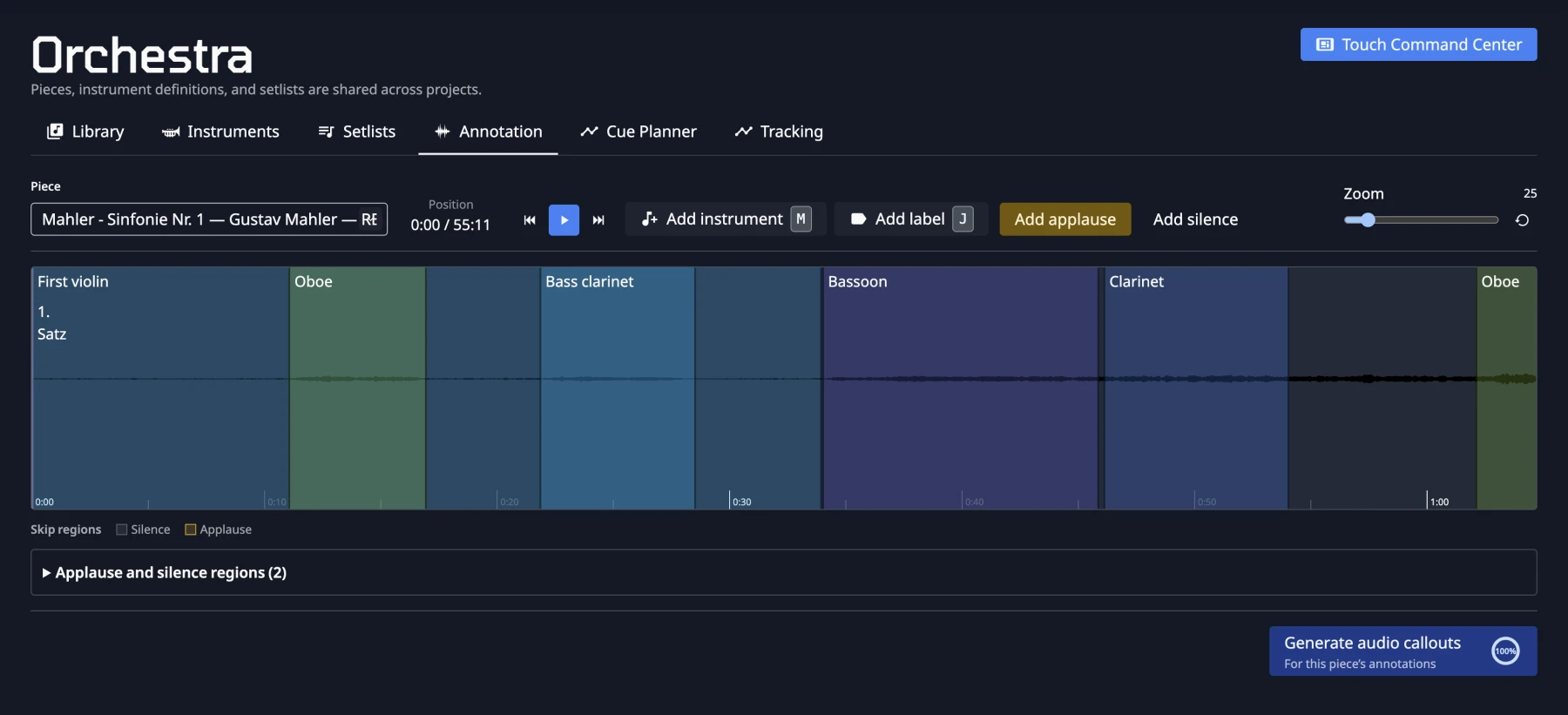
Before the concert, the production team marked the instrumental entries they wanted to cover as cues on a reference recording. This is the musical preparation familiar from marking up a score for video direction: Where would a close-up help? Which section should be visible? Which musical transitions should be told through the images?
These cues do not need to be assigned to individual cameras. The production team prepares what matters musically. During the performance, MiruSuite Orchestra decides which camera and available presets can best cover the upcoming entries.
For more control over camera assignments, cues can also be assigned to specific cameras. MiruSuite assists with automatic planning while leaving the production team free to define the assignments themselves. At the venue, before the concert begins, the software can flag problems in the camera plan, such as missing presets or passages where a transition would not be possible with the current assignments. This allows the production team to identify and address those constraints during preparation.
There is also work to do at the venue. Camera positions and framing need to suit the orchestra’s layout. For this production, the team managed more than 60 presets using MiruSuite’s workflows developed specifically for live production. Careful composition remains part of preparation; during the concert, the software can draw on those prepared shots.
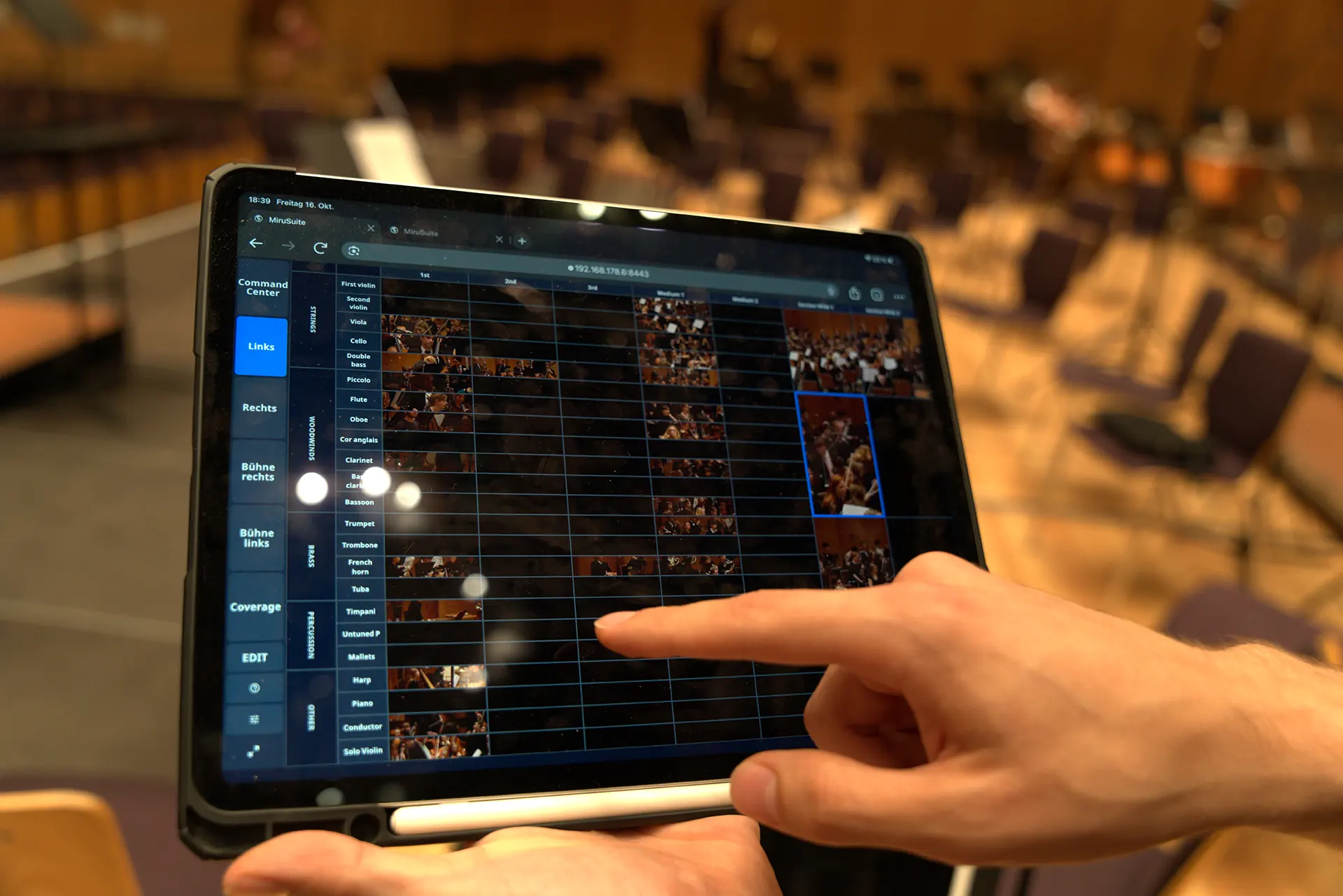
Preparing shots on a tablet: available presets are accessible by instrument.
While Mahler Plays, MiruSuite Plans Ahead
During the concert, musical score following tracks the performance in real time. Using the prepared reference recording, MiruSuite Orchestra identifies the orchestra’s current position. The cue list follows the performance and updates live.
That musical position becomes practical support for the production crew:
▪ Audio callouts announce upcoming instrumental entries in advance. The same information appears in the cue list.
▪ Automatic camera scheduling plans which cameras will cover which instruments and prepares the appropriate shots.
▪ Built-in safeguards help prevent unwanted camera movements and incorrect cuts.
Instead of continuously reading the score and manually coordinating every camera assignment, the crew received relevant information automatically.
This reduced the amount of routine coordination required during the performance and allowed the team to focus more attention on the visual decisions that shape the final recording.
Two People, More Room for Creative Decisions
The production team consisted of a director and a camera assistant. MiruSuite supported coordination; creative decisions remained at the control desk. The director could assess framing, choose cuts and shape the visual pacing. Camera movements could be triggered at the push of a button.
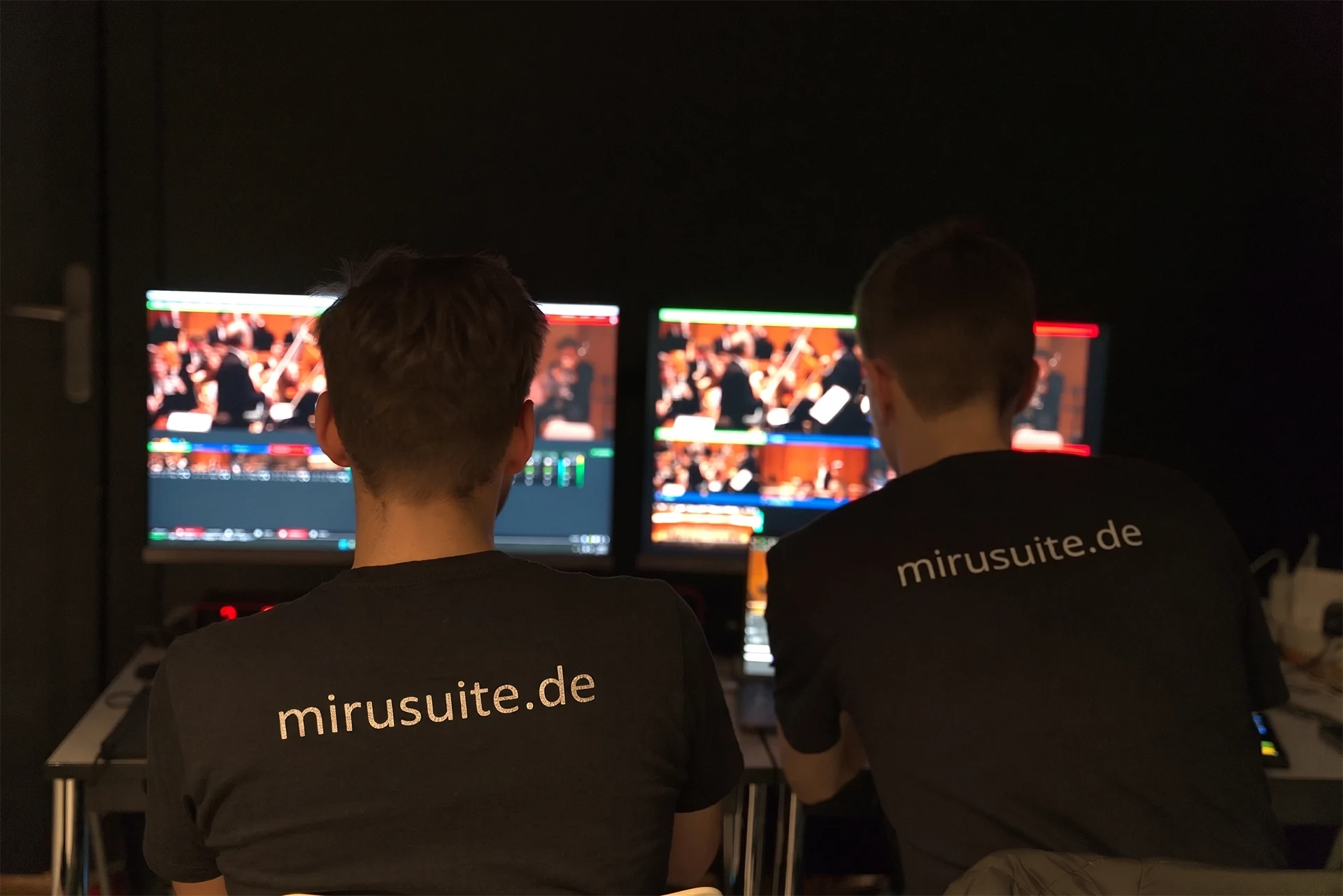
The director and camera assistant at their shared control desk. MiruSuite Orchestra supports the production team with camera coordination.
An announced entry offers a possible shot. Whether to take it immediately, hold another angle longer or introduce a camera movement is a creative decision. The value of automation lies in supporting those choices with prepared images and timely information.
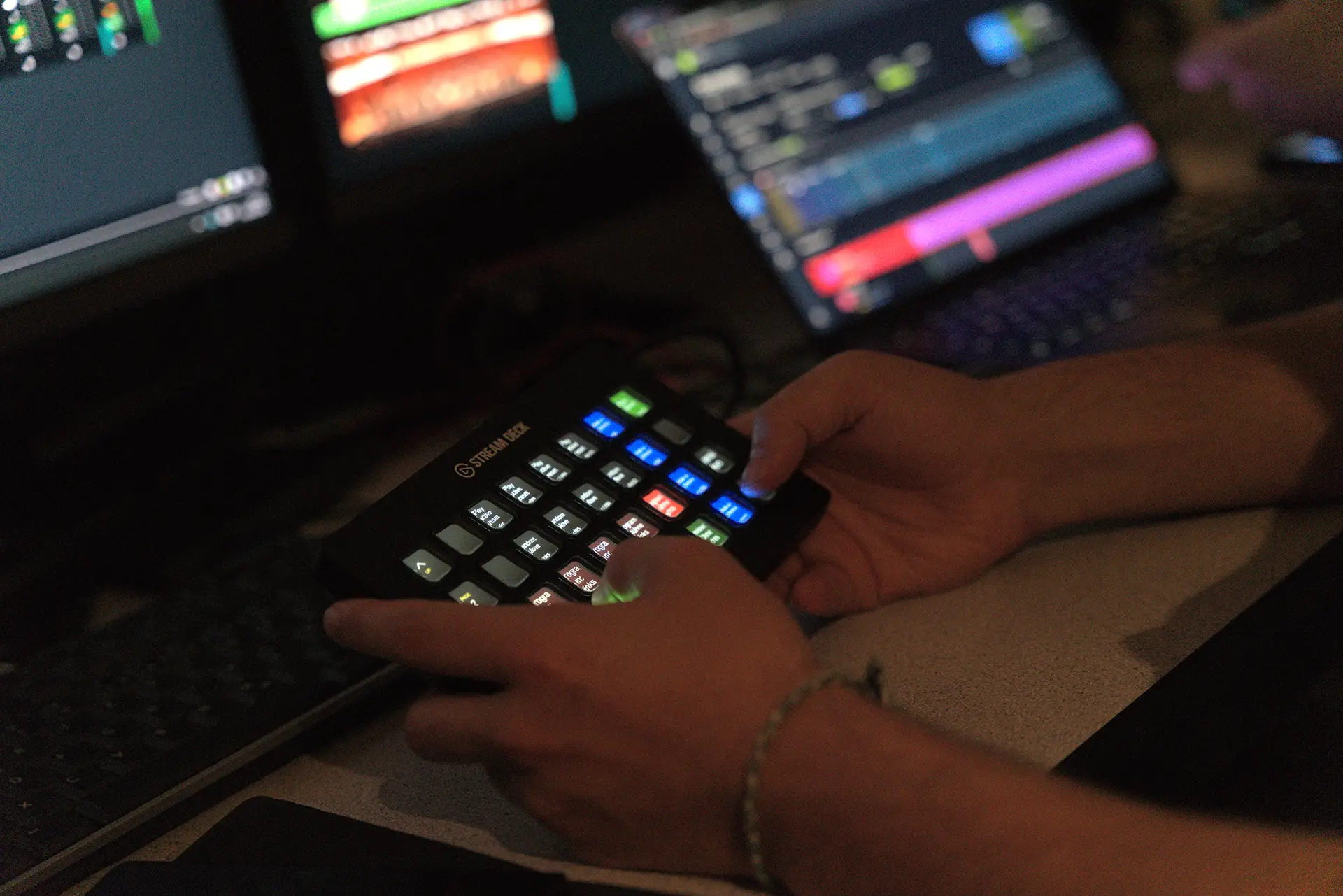
The director controls the live cut. MiruSuite helps prepare the next camera angles.
See the Workflow in Action
The video below offers a closer look at how the workflow comes together during a live performance. It shows all five camera angles, the live programme feed and the MiruSuite Orchestra interface. You can also hear the automatic audio callouts as the cue list follows the music in real time.
Watch how the different elements work together: an upcoming instrumental entry is announced, suitable camera angles are prepared, and the director makes the final selection for the programme feed. Together, these views and tools show how the two-person production team managed the recording.
What the Chemnitz Production Demonstrates
Five cameras, more than 60 presets and two people: this production shows how a small crew can deliver a complex concert recording. Musical preparation and setting up the shots remained essential tasks. During the performance, MiruSuite Orchestra connected them in a shared workflow of score following, entry announcements and camera coordination.
For smaller production teams, this approach points to new possibilities for creating ambitious concert recordings with fewer people involved in routine camera coordination, while leaving more room for composition and musical storytelling.